
Why The NBA Point Spread Betting Rewards System Thinkers
The NBA League runs 82 regular-season games per team. That’s over 1,200 games before the playoffs even start. More games mean more data. More data means more patterns. More patterns mean more exploitable edges — if you know where to look.
NBA point spread betting is one of the most active markets in sports wagering. Lines open, move, and close within hours. Sharp money hits fast. Public money follows narrative. The spread reflects all of it.
Most recreational bettors approach NBA point spread tips the same way every night. They check the standings, look at recent results, and bet on the better team. That process ignores everything that actually drives spread outcomes — rest, pace matchups, travel, motivation, and line movement.
These eight NBA point spread tips target the real drivers. Each one is grounded in observable, repeatable market behavior. Applied consistently over a full season, they shift your edge from guessing to process.
The 8 NBA Point Spread Tips Sharp Bettors Apply Every Night
1. Fade Heavy Road Favorites on Zero Rest
A team playing the second night of a back-to-back on the road as a large favorite is one of the most exploitable spots in NBA point spread betting. Star players get rest minutes. Rotations shorten. Energy drops in the fourth quarter — exactly when spreads get decided.
2. Back Home Underdogs Against Top-Five Offenses
Home underdogs facing elite offensive teams are consistently undervalued. The public bets the high-powered offense. The line shades toward the favorite. The home team, playing with crowd energy and familiarity, covers at rates that exceed market expectations.
3. Target Pace Mismatches
Teams with vastly different pace ratings create scoring environment advantages that the point spread doesn’t always capture. A fast-paced team facing a slow opponent in a neutral-feeling game produces unpredictable scoring totals that affect spread coverage patterns.
4. Bet Against Teams on the Second Night of a Back-to-Back Away From Home
This is the most statistically supported of all NBA point spread tips. Road teams on the second night of a back-to-back cover the spread at significantly below 50% across multiple seasons. The combination of travel fatigue and schedule compression compounds performance decline in measurable ways.
Check every game’s schedule context before placing a spread bet. If the road team played last night in a different city, the edge is real.
5. Follow Sharp Line Movement on Divisional Games
Divisional familiarity in the NBA is underrated by casual bettors. Teams that face each other four to five times per season develop specific defensive coverages and game plans for each matchup. When a line moves against public money in a divisional game — reverse line movement — sharp bettors are almost always behind it.
6. Fade Teams Playing Four Games in Six Nights
Four games in six nights is the NBA’s most demanding schedule cluster. Teams in this stretch manage minutes, limit practice time, and frequently rest key contributors with minimal advance notice. The line is set before lineup decisions are confirmed.
Check every team’s schedule for this pattern. A team in game four of a six-night stretch covering -8 or more is asking a lot. The under is often the sharper play, but the spread also becomes vulnerable.
7. Buy Into Motivated Underdogs After Public Overreaction
The NBA media cycle amplifies blowout losses. A team loses by 25, and the next line reflects public panic selling. Sharp bettors fade that reaction. The emotional reset after a bad performance is a genuine competitive factor. It’s also chronically underpriced in NBA point spread markets.
8. Track Closing Line Value, Not Just Results
This is the most important of all NBA point spread tips for long-term bettors. Track every spread bet against the closing line at a sharp book like Pinnacle. If you consistently get better numbers than the closing line, your process is working — even during losing streaks.
Schedule and Rest Factors That Quietly Drive NBA Point Spread Results
Rest and schedule are the most underpriced variables in NBA point spread betting. The market adjusts for fatigue — but the adjustments are imprecise.
Teams with two or more days of rest versus a team on zero rest create a meaningful performance gap. That gap shows up most clearly in fourth-quarter margins — exactly when spread outcomes are decided.
Three specific schedule patterns worth monitoring every week:
The lookahead game. A team faces a weak opponent this game but plays a rival or playoff contender tomorrow. Load management decisions happen quietly. Minutes get restricted. The weak opponent covers more often than the spread suggests.
The post-travel spot. Cross-country travel — West Coast teams flying east for 8 PM tip-offs — creates early-game energy deficits. Eastern Conference teams maintain home rhythms. The spread rarely fully prices the time zone adjustment.
The end-of-road-trip game. Teams finishing a four or five-game road trip play their worst basketball in the final game. Home teams facing a road team in game five of a trip cover spreads at historically above-average rates.
These NBA point spread tips based on schedule require no advanced modeling. Just a calendar and consistency.
Reading Line Movement to Sharpen Your NBA Point Spread Picks
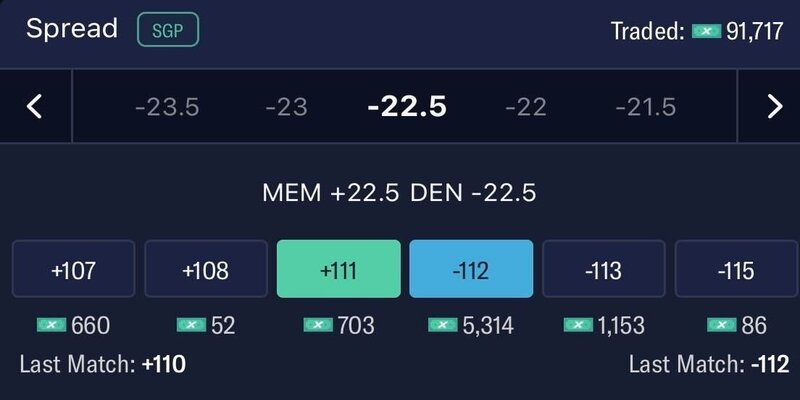
Line movement tells a story. Learning to read it sharpens every NBA point spread decision you make.
When a line moves toward the public betting side, the book is managing liability. When a line moves against the public — reverse line movement — sharp money is almost certainly driving it. Sharp bettors in the NBA market have access to injury information, lineup intelligence, and sophisticated models. When they push a line in an unexpected direction,
Turning These NBA Point Spread Tips Into a Repeatable Process
Eight tips applied randomly produce inconsistent results. Eight tips applied through a structured process produce measurable improvement over a full season.
Build a pre-bet checklist. Before every NBA point spread wager, run through these filters: rest differential, schedule context, pace matchup, line movement direction, and public betting percentage. After 100 bets, calculate your closing line value average. That number — not your win percentage — tells you whether these NBA point spread tips are working in your specific betting environment.
Conclusion
NBA point spread betting rewards bettors who treat it as a process, not a prediction contest. These eight NBA point spread tips target the real variables that drive spread outcomes — rest, schedule compression, pace mismatches, line movement, and situational motivation. None of them guarantee winners every night. Build the checklist. Track the closing line value. Let the sample size do the work.