

NHL Puck Line Strategy Starts With Understanding the Structure
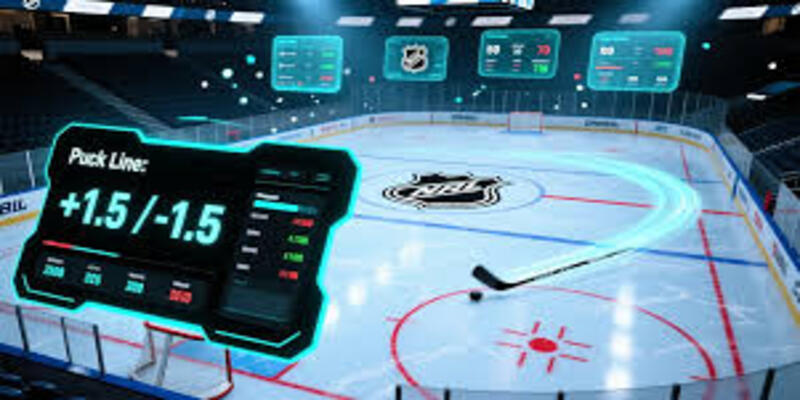
Hockey bettors who come from football or basketball expect spreads to move. In the NHL League, they don’t. The puck line is fixed at 1.5 goals — always. Every game, every matchup, regardless of talent gap.
The favorite gives 1.5 goals at -1.5. They need to win by two or more for the puck line bet to cash. A one-goal win loses the puck line even though the team won the game.
The underdog gets 1.5 goals at +1.5. They win the bet by either winning outright or losing by exactly one goal.
That fixed structure is the foundation of every NHL puck line strategy. Before you apply any angle or situational filter, you need to internalize one fact: one-goal games are extremely common in hockey. Roughly 25–30% of NHL games end with a one-goal margin in regulation. Another 15–20% go to overtime or a shootout — which also counts as a one-goal result for puck line purposes.
That means nearly half of all NHL games end with a one-goal differential or less. Puck line favorites lose their bet in almost half of all games they win on the moneyline. That frequency shapes everything about how a serious NHL puck line strategy should be constructed.
Understanding the structure isn’t optional. It’s the entire foundation.
The Core NHL Puck Line Strategy for Backing Favorites
Taking the favorite at -1.5 is the most common puck line bet. It’s also the most misused.
The basic logic is sound. A dominant team priced at -220 on the moneyline carries steep juice. Taking that same team at -1.5 for -130 or -140 saves 80 to 90 cents per dollar wagered. If the team wins comfortably, you get paid better than the moneyline would have delivered.
But the NHL puck line strategy for favorites requires more than price comparison. It requires identifying games where two-goal wins are genuinely more probable than the market implies.
Three conditions favor the -1.5 puck line on favorites:
Elite starter versus a struggling offense. A top-10 goaltender facing a bottom-third scoring team creates the conditions for low-scoring, lopsided games. If the favorite’s offense is also top-tier, multi-goal wins become the most likely outcome class.
High team save percentage differential. Teams with a significant save percentage advantage over their opponents win by multiple goals at higher rates. Track five-game rolling save percentages to identify these mismatches before betting.
Back-to-back games for the underdog. A road team on the second night of a back-to-back is fatigued and often starts a backup goaltender. The favorite at home in this spot covers the puck line at historically above-average rates. This is one of the most reliable situational edges in any NHL puck line strategy.
Taking the +1.5 Puck Line: When Underdog Strategy Pays Off
The +1.5 puck line on underdogs is the defensive side of NHL puck line strategy. You’re buying 1.5 goals of protection in exchange for reduced odds compared to the moneyline.
A team priced at +160 on the moneyline might be +120 on the puck line. You give up 40 cents of payout but gain insurance against a close loss. In a sport where one-goal margins are the norm, that insurance has genuine value.
The best situations for +1.5 puck line underdog strategy:
Quality goaltender starting for the underdog. A hot goalie can steal games and almost always keeps them close. Underdogs with starting goaltenders posting .920+ save percentage in recent starts cover the +1.5 puck line at rates that beat market pricing.
Divisional matchups. Divisional familiarity compresses scoring differentials. Teams that play each other repeatedly know each other’s systems. Large margins are rare in these games. The +1.5 underdog in a divisional game is one of the steadiest spots in NHL puck line strategy.
Underdogs with strong penalty kill units. Power play goals create margin. A team with an elite penalty kill reduces the opponent’s best multi-goal scoring opportunities. Underdogs ranked top-10 in penalty kill percentage give up fewer multi-goal deficits — making +1.5 coverage significantly more likely.
Building a Full NHL Puck Line Strategy Around Repeatable Edges
An NHL puck line strategy isn’t one tip applied randomly. It’s a layered filter system applied consistently.
Before every puck line bet, run through this checklist:
Is the starting goaltender confirmed for both teams? If not, wait. Has the underdog played within the last 24 hours? If yes, the favorite at -1.5 becomes more viable. Is this a divisional game? If yes, lean toward +1.5 on the underdog. Is the implied total above 6.5? If yes, avoid -1.5 on the favorite. Does the favorite have a significant save percentage advantage over the last ten games? If yes, -1.5 becomes more attractive.
Each filter individually shifts your edge by one to two percentage points. Combined on a single game, they can identify spots where puck line bets carry 55% or higher true probability — meaningful positive expected value at standard odds.
Track every puck line bet against the closing line at sharp books. If your puck line bets consistently beat the closing number, your strategy is finding real inefficiencies. If your closing line value is flat or negative, revisit your filters.
Bet fewer games with higher confidence per bet. The NHL regular season offers 1,312 games. You don’t need to bet all of them. You need the right 150 to 200.
Conclusion
A well-built NHL puck line strategy turns one of hockey’s most unique structural features — the fixed 1.5-goal spread — into a consistent source of betting edge. The key is context. Favorites at -1.5 make sense when goaltending mismatches and fatigue spots point toward multi-goal wins. Underdogs at +1.5 make sense when divisional familiarity, strong goaltending, and elite penalty killing suggest close margins.
Neither side is automatically correct. The puck line rewards bettors who do the pre-game work — confirm starters, check schedule context, track save percentages, and read line movement. Apply those filters consistently, and the puck line becomes one of the sharpest tools in any hockey bettor’s arsenal.