
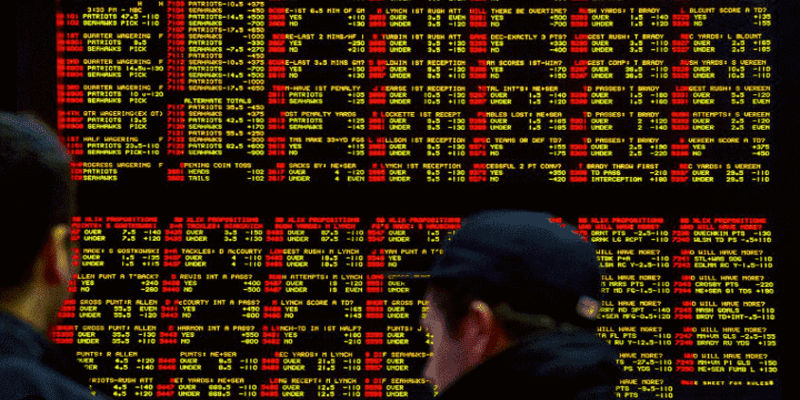
Closing Line Value: The Metric Sharp Bettors Obsess Over
Most bettors measure success by wins and losses. Sharp bettors measure something different. They track closing line value — CLV — on every single bet.
Closing line value is the difference between the odds you got and the odds available at game time. If you bet a team at -110 and the line closes at -130, you beat the closing line. You got a better number than the market’s final consensus. That’s positive closing line value.
If you bet -110 and the line closes at -105, you have a negative closing line value. The market moved away from you. You paid more for a position the market later priced cheaper.
The closing line is the most efficient price a game will carry. By kickoff or tip-off, the market has absorbed sharp money, injury news, weather updates, and public betting patterns. The closing line reflects the collective wisdom of the most informed bettors in the world. Beating it consistently means your opinions are sharper than average.
How to Calculate Closing Line Value on Your Own Bets
Calculating the closing line value is straightforward. You need two data points: your bet price and the closing price at the book you used — or at a sharp market like Pinnacle, which is the standard reference for CLV tracking.
Basic CLV formula using implied probability:
- Convert your odds to implied probability
- Convert the closing odds to implied probability
- Subtract closing implied probability from your implied probability
Example: You bet a team at +150 (implied probability: 40%). The line closes at +120 (implied probability: 45.5%).
Your CLV = 45.5% – 40% = +5.5%
You locked in a price that implied 40% when the market later priced the same outcome at 45.5%. You got a significantly better number. That’s strong positive closing line value.
Negative CLV example: You bet -110 (implied: 52.4%). Closes at -105 (implied: 51.2%).
Your CLV = 51.2% – 52.4% = -1.2%
Small negative, but still negative. You paid more juice for a position the market repriced in the other direction.
Most serious bettors track CLV in a spreadsheet alongside every bet. Over time, the average CLV across hundreds of bets tells you more about your betting skill than your win rate does.
Why Positive Closing Line Value Predicts Long-Term Profitability
Win rate tells you what already happened. CLV tells you whether your process is likely to generate profit going forward.
The logic is clean. The closing line is the most accurate price. If you consistently beat it, you’re systematically finding better-than-market prices. Better prices mean better expected value on every bet. Better expected value compounds into profit over large samples.
Research from professional betting communities confirms this relationship. Bettors with consistently positive closing line — even +1% to +2% on average — tend to show positive ROI over full seasons. Bettors with neutral or negative CLV tend to lose money regardless of short-term results.
The Situations Where Value Misleads Bettors
Closing line value is powerful but not infallible. There are real situations where CLV misleads.
Reverse line movement traps. Sometimes the line moves against public money — sharp action pushes a line in an unexpected direction. A bettor who faded public action and lost CLV might have actually made the correct decision conceptually. CLV doesn’t always capture why a line moved.
Soft book vs. sharp book discrepancies. If you’re comparing your bet price to a soft book’s closing line rather than Pinnacle or a sharp market, your CLV calculation is unreliable. Soft books shade lines toward public favorites and move on public money. Their closing lines don’t reflect true market efficiency.
Last-minute line moves from non-predictive information. Injury news breaking minutes before tip-off can cause sharp line movement that has nothing to do with pre-game analysis. If you bet early and the line moves on a late scratch you couldn’t have known about, your negative CLV is misleading. The market moved on information that wasn’t available when you bet.
Small sample size distortion. CLV over 30 or 50 bets is noisy. A bettor can show strong positive CLV over a small sample due to luck in line movement timing. Meaningful CLV analysis requires 200 bets minimum. Preferably 500 or more.
Sport and market selection bias. CLV is most meaningful in efficient markets — NFL spreads, NBA totals, major soccer match lines. In niche markets with thin liquidity, the closing line is less reliable as a benchmark. CLV in those markets carries wider error margins.
Building a Betting Process
Tracking closing line changes how you approach the entire betting strategy— from line shopping to timing your bets.

Shop lines aggressively. The primary way to generate positive CLV is to find the best available price before the market corrects it. Having accounts at five or more books isn’t optional for serious bettors. It’s the foundation. Every half-point or point you gain through line shopping contributes directly to CLV.
Bet early on games where you have an opinion. Sharp money moves lines. If your read aligns with sharp action, the line moves away from you after you bet. Getting in early — before the sharp money arrives — is how you capture closing line value on your best plays.
Record every bet with time stamped odds. You can’t track CLV without data. Log your odds at time of bet, the book you used, and look up the closing line at Pinnacle within 24 hours of the game. Build this habit from your first bet.
Evaluate yourself on CLV, not results. After 100 bets, calculate your average CLV. If it’s consistently positive, your process is working. If it’s flat or negative, your line shopping or timing needs adjustment — regardless of whether you’re winning or losing on results.
Use CLV to identify your strongest bet types. Break your CLV down by sport, market, and bet type. You might find strong positive CLV on NBA totals and negative CLV on NFL moneylines. That data tells you where your edge is real and where it isn’t.
Conclusion
Closing line value is the most honest measure of betting skill available to sports bettors. It removes the noise of short-term variance and reveals whether your process is generating genuine edge. Positive CLV means you’re consistently finding prices better than the market’s final consensus — the clearest signal that long-term profitability is within reach. Building a betting process around closing line requires discipline, multi-book access, and rigorous record keeping.