
In the digital age of sports wagering, you don’t have to guess what the rest of the world is thinking. Every time you open a betting app, you are participating in a massive, real-time poll. The result of this poll is what the industry calls consensus picks.
These represent the side of a bet that the majority of the public is backing. While it might be tempting to follow the crowd, professional bettors view consensus picks with a healthy dose of skepticism. At Moneyline.fyi, we believe that understanding the psychology behind these numbers is the key to moving from a “square” bettor to a market analyst.
The Mechanics and Origins of Consensus Picks
When we talk about consensus picks, we are looking at aggregated data from multiple sportsbooks. This data shows the percentage of total bets placed on each side of a spread, total, or moneyline. For example, if a dashboard shows that 75% of bettors are taking the Kansas City Chiefs, then the Chiefs are the official picks for that matchup.
This data is usually broken down into two categories: ticket count and money percentage. The ticket count tells you how many individual bets were placed. The money percentage tells you the total dollar amount wagered. True consensus picks occur when both the number of bets and the total money align on one side. However, the most interesting opportunities often arise when there is a split between the two.
If the public is heavy on one side but the big money is on the other, the “consensus” is actually a trap. Understanding these nuances is the first step in using these picks as a strategic tool rather than a blind guide.
Why the Public Often Fails with Consensus Picks
There is an old saying in Las Vegas: “The house wasn’t built on winners.” The reason sportsbooks are so profitable is that the general public—the source of most consensus picks—tends to lose over the long term. This happens because casual bettors are driven by emotion and “recency bias.” They tend to bet on popular teams, star players, and high-scoring games.
As a result, these picks are often heavily skewed toward favorites and the “Over.” When everyone is betting on the same side, the sportsbook has to adjust. They will shade the line, making the favorite more expensive to cover. By the time a casual bettor follows the these picks, they are often paying a “public tax” of half a point or more. This is why “blindly” following the crowd is a losing strategy. The public isn’t just betting on the game; they are betting on a narrative, and narratives don’t always cover the spread.
The Art of Fading Consensus Picks for Maximum Value
If the public is often wrong, it stands to reason that the opposite side might be right. This strategy is known as “fading the public.” When you fade picks, you are betting against the majority. This is a favorite tactic of professional “contrarian” bettors. They look for games where the picks have reached extreme levels—usually 70% or higher.
The logic is simple: if everyone is on one side, who is left to keep betting and move the line further? The value has been sucked out of the favorite. By taking the underdog against the consensus picks, you are often getting a better number than you should. You are essentially betting with the “house.”
When the sportsbook has a massive liability on one side due to the picks, they need the other side to win to balance their books. Fading the public allows you to align your interests with the most successful entity in the gambling world: the sportsbook itself.
Spotting Sharp Divergence in Consensus Picks Data
One of the most advanced ways to use consensus picks is to look for “Sharp Divergence.” This happens when the ticket count and the money percentage move in opposite directions. Imagine a game where 80% of the tickets (the public) are on Team A, but 60% of the total money is on Team B. In this scenario, the picks are meaningless because the “smart money” is moving against the crowd.
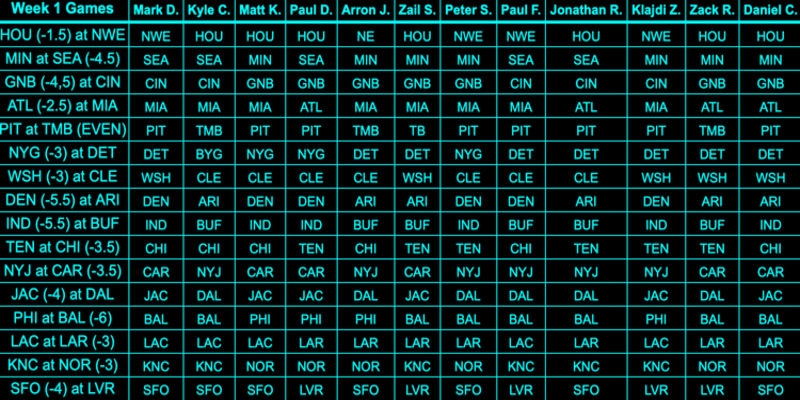
A picks tracker that provides these splits is a goldmine. It allows you to see when professional syndicates are betting against the general public. When you see a low ticket count combined with a high money percentage, you have found a “sharp” play.
These professionals have access to better data, more advanced models, and deeper bankrolls than the average fan. Following the sharp money while fading the picks is one of the most reliable ways to find long-term profitability in an efficient market.
Integrating Consensus Picks into a Holistic Strategy
So, should you always ignore consensus picks? Not necessarily. Sometimes the public is right. If a superstar player is ruled out, the picks will naturally shift toward the opponent for a legitimate reason. The key is to use picks as a piece of the puzzle, not the entire picture.
A professional approach involves three steps. First, do your own handicapping and set your own “fair” line. Second, check the picks to see where the market sentiment lies. Third, look for discrepancies. If your model says a team should be +3, and the consensus picks have driven the line to +5, you have found a 2-point value gap. By combining your analytical skills with an understanding of public psychology, you turn picks from a distraction into a powerful indicator of market inefficiency.
Conclusion
In the world of sports betting, the crowd is often loud, but they are rarely rich. Consensus picks serve as a fascinating mirror of public opinion, but they are not a shortcut to success. They represent the “baseline” of the market—the starting point from which value is created.
To win consistently, you must learn to think independently. Use consensus picks to understand where the public is overreacting and where the sportsbooks are exposed. Whether you choose to follow the sharp money or fade a popular favorite, your decisions must be based on data, not headlines.
At Moneyline.fyi, we believe that the best bettor is the one who watches the crowd but walks their own path. Master the nuances of these picks, stay disciplined, and always look for the value that the majority misses. The greatest wins are often found exactly where the public is afraid to look.