

In the world of sports betting, most novices spend their time obsessing over player stats, coaching changes, and historical matchups. While these are important, they often ignore a variable that can completely override a team’s talent: the environment. At Moneyline.fyi, we teach that the atmosphere is just as important as the athletes.
Understanding weather betting factors is the difference between a “square” bettor who gets blindsided by a storm and a professional who uses the forecast to hunt for value. When the sky changes, the odds change, and if you aren’t watching the radar, you’re already behind the bookie.
The Invisible Influence: Wind as the Primary Weather Betting Factors
If you ask a professional bettor which of the weather betting factors is the most lethal, they won’t say snow or rain. They will say wind. Wind is the ultimate equalizer in outdoor sports, particularly in football and baseball. In the NFL, a sustained wind of over 15 mph can drastically alter a team’s offensive strategy. It makes deep passes risky and turns field goal attempts into a guessing game.
When wind speeds rise, the “Under” becomes a very attractive play. Quarterbacks struggle with accuracy, and coaches tend to lean more on the running game, which keeps the clock running and limits scoring opportunities. In baseball, weather factors like wind direction can turn a home run into a fly-out or vice versa. If the wind is blowing “in” at Chicago’s Wrigley Field, the total will often drop by two or three runs.
As a bettor, you must check the wind speed and direction for every outdoor game. It is the silent killer of high-scoring games and a primary driver of line movement.
Temperature Extremes and Their Impact on Athlete Performance
While wind affects the ball, temperature affects the body. Temperature is one of the most underrated weather betting factors. Extreme heat can lead to faster fatigue, especially for defensive units that have to stay on the field for long drives. In the early weeks of the football season, games played in high humidity and heat often favor the home team that is acclimated to the climate.
Conversely, extreme cold introduces a different set of weather factors. In freezing temperatures, the ball becomes more difficult to catch or kick. Scoring often dips in the “frozen tundra” of late-season games. However, it’s not just about the cold—it’s about the “spread” between the teams’ typical environments. If a team from sunny Miami travels to play in 10°F weather in Buffalo, the psychological and physical shock is a significant factor. Smart bettors use these temperature-related weather betting factors to identify teams that are likely to underperform based purely on their inability to handle the elements.
Precipitation Logic: Beyond the Visual Chaos of Rain and Snow
Fans love watching games in the snow, but for bettors, precipitation requires a more nuanced approach. Rain and snow are flashy weather betting factors, but they don’t always lead to lower scores. In fact, light rain can sometimes benefit the offense. Defensive backs often struggle with footing more than wide receivers, who know exactly where they are going to cut. This can lead to big plays and “Over” results.
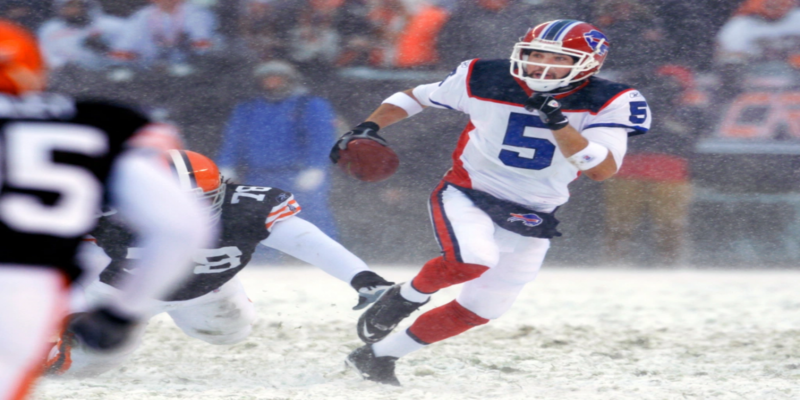
However, heavy snow or torrential rain acts as one of the most restrictive weather factors. It limits visibility and turns the field into a mud pit. In these conditions, the game plan becomes one-dimensional. The focus shifts to ball security rather than scoring. When analyzing weather factors, you have to distinguish between “nuisance” rain and “game-changing” storms. The former might have zero impact on the odds, while the latter can cause the point total to crash by 5 to 7 points in a matter of minutes.
Calculating the Market Overreaction to Weather Betting Factors
One of the most profitable ways to use environmental data is to identify when the betting public panics. The “square” public loves to bet the “Under” as soon as they see a snowflake on the TV screen. This creates a situation where weather betting factors lead to an overcorrected line. If the total opens at 48 and the public drives it down to 41 because of a forecast, the value might actually switch back to the “Over.”
Professional bettors use historical data to quantify exactly how much weather factors should be worth. If a 20 mph wind is statistically worth 3 points, but the market moves the line 6 points, you have found a “buy-low” opportunity. Successful wagering isn’t just about knowing that it’s going to rain; it’s about knowing if the rain is already “baked into the price.” By comparing the forecast against the closing line, you can determine if the weather factors have been accurately priced or if the market has succumbed to hysteria.
Leveraging Stadium Geography and Modern Forecasting Tools
Finally, you cannot analyze weather betting factors without considering the stadium’s architecture. Not all outdoor stadiums are the same. Some are “bowls” that protect the field from the wind, while others are “wind tunnels” due to their orientation. For example, a 20 mph wind in an open-ended stadium is much more impactful than the same wind in a fully enclosed structure.
To stay ahead, you need to use professional tools. Relying on the local news isn’t enough. Use specialized websites that provide “stadium-level” forecasts. These tools allow you to track weather betting factors hour by hour. If a storm is expected to clear out 30 minutes before kickoff, the early-week “Under” bettors might find themselves on the wrong side of a clear-sky shootout. In the modern era, weather betting factors are data points, and like any other data point, they must be tracked with precision and skepticism.
Conclusion
In the final analysis, the weather is the one player on the field that never gets tired and never has an off night. Weather betting factors are a permanent part of the sports betting landscape. You can ignore them and hope for the best, or you can master them and use the atmosphere as your secret weapon.
By focusing on wind as a primary driver, understanding the fatigue caused by temperature, and distinguishing between types of precipitation, you move from a gambler to an analyst. Always remember: the sportsbook is watching the radar, and you should be too. Use weather factors to find the gaps in public perception, time your entries based on the forecast, and never let a storm cloud catch you off guard. At Moneyline.fyi, we believe that the best way to win is to be prepared for anything—even a change in the wind.