How to Read Lines Starts With Knowing What a Line Actually Is
A lot of beginners stare at a betting board and see noise. A column of numbers, plus signs, minus signs, and fractions. It looks like a foreign language.
It’s not. Once you know the logic behind it, reading a betting line becomes fast and automatic.
A line is simply the sportsbook’s way of expressing two things at once: the price of a bet and the implied probability of an outcome. Every number you see on a betting board is doing both jobs simultaneously. Learning how to read lines means learning to see both layers — not just the payout, but the probability hidden inside it.
There are three main bet types you’ll encounter on any major sportsbook: the moneyline, the point spread, and the total (also called the over/under). Each one reads differently. Understanding all three is the foundation.
How to Read Lines: The Simplest Moneyline on the Board
The moneyline is the cleanest starting point when learning how to read lines. You’re simply betting on who wins the game. No margin required.
The numbers are expressed in American odds format. Negative numbers indicate the favorite. Positive numbers indicate the underdog.
Example:
- Kansas City Chiefs: -165
- Las Vegas Raiders: +140
A -165 line means you risk $165 to profit $100. A +140 line means a $100 bet profits $140.
But here’s what those numbers really say. A -165 favorite carries an implied probability of about 62.3%. A +140 underdog implies roughly 41.7%. Add those together and you get more than 100% — that extra percentage is the vig, the sportsbook’s built-in margin.
That’s the first real skill in how to read lines: seeing the probability inside the price. The formula for negative odds is |odds| ÷ (|odds| + 100). For positive odds: 100 ÷ (odds + 100).
How to Read Lines on the Point Spread
The point spread is where how to read lines gets a layer more complex — and a lot more interesting.
The spread doesn’t ask who wins. It asks who wins by how much. The sportsbook sets a margin, and your job is to decide whether the favorite covers it or the underdog beats it.
Example:
- Dallas Cowboys: -4.5 (-110)
- New York Giants: +4.5 (-110)
Dallas is favored by 4.5 points. They need to win by 5 or more for spread bettors on Dallas to cash. New York can lose by up to 4 points and spread bettors on the Giants still win.
The -110 next to each spread is the price — also called the juice or vig. It means you risk $110 to profit $100 on either side. That -110 is the standard pricing on spread bets, though it can vary. When you see -105 or -115, that’s a meaningful difference in your long-term costs.
A few things to watch when reading a spread line. Half-points matter. The difference between -3 and -3.5 in the NFL is significant — 3 is a key number, one of the most common final scoring margins. Getting the right side of a key number is a real edge. Always check both the spread value and the price attached to it.
Reading Totals: The Over/Under Line Explained
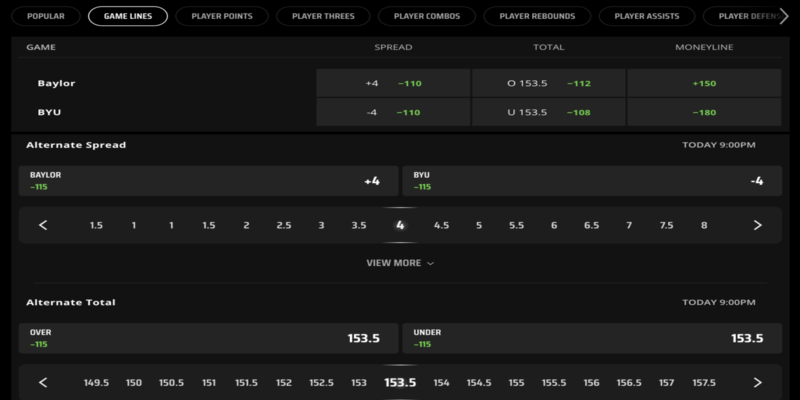
The total — commonly called the over/under — is the third major line type. Instead of picking a winner, you’re betting on whether the combined score of both teams lands over or under a set number.
Example:
- Over 47.5 (-110)
- Under 47.5 (-110)
The book sets 47.5 as the total points line for an NFL game. Bet the over if you think both offenses put up big numbers. Bet the under if you expect a defensive battle or slow pace.
The same rules apply as with spreads: read the number and the price. Both sides are usually priced near -110, but sharp action or public betting can shift the price on one side. When you see Over 47.5 priced at -130 and Under 47.5 at +108, that tells you something. The market has moved. One side attracted more action.
Line Movement: The Part of How to Read Lines Most Bettors Ignore
Opening lines and closing lines are often different. That gap is called line movement — and knowing how to read it is one of the most underrated skills in sports betting.
Books open a line based on their early assessment of the matchup. Then the public bets. Sharp bettors — those with a track record of winning — also bet. The book adjusts the line in response.
Why this matters: if a spread opens at -3 and moves to -5, the market is telling you something. Either sharp money came in heavily on the favorite, or the public piled on and the book moved to balance its exposure.
The distinction matters. Sharp line movement tends to be informative — it often reflects injury news, weather updates, or a genuine mispricing the market corrected. Public line movement is noisier. Knowing which type caused the shift helps you decide whether to follow the move or fade it.
Steam moves are another signal to know. A steam move is a fast, sharp line shift across multiple sportsbooks in a short window. When a line jumps -3.5 to -5 within minutes, coordinated sharp action almost certainly drove it. Following steam moves or at least avoiding fading them is standard practice among serious bettors.
Check line movement on Moneyline.fyi before placing any bet where timing might matter. Getting a line before it moves is real value — the kind that doesn’t require you to out-analyze the market, just act faster than the public.
What You’re Really Doing When You Learn How to Read Lines
Learning how to read lines isn’t about memorizing formats. It’s about building a new way of looking at a game.
Every line is a market price. It reflects collective information — public sentiment, sharp action, injury news, historical trends. Your job as a bettor is to decide whether that price is accurate. When it isn’t, and you can identify why, that’s where a bet earns its place.
Read the moneyline for win probability. Read the spread for margin expectations. Read the total for scoring context. Read line movement for market intelligence.