

Kelly Criterion Betting vs. Flat Staking: The Core Difference
Most bettors start with flat staking. Pick a unit size — say $20 — and bet that amount every single game. Simple. Consistent. Easy to track.
Kelly Criterion betting works differently. Instead of a fixed amount, it calculates exactly how much to bet based on your edge over the sportsbook.
The Kelly formula: f = (bp – q) / b
Where:
- f = fraction of bankroll to wager
- b = decimal odds minus 1
- p = your estimated probability of winning
- q = probability of losing (1 – p)
If you estimate a 55% chance of winning a -110 line, Kelly tells you to bet roughly 5.5% of your bankroll. No guessing. No gut feel. Just math.
Flat staking ignores edge entirely. You bet the same amount whether you have a 2% edge or a 12% edge. That’s the fundamental weakness. Kelly Criterion betting scales your wager to match the actual opportunity.
Over a long sample, Kelly grows your bankroll faster than flat staking when your edge estimates are accurate. That’s the promise — and the catch. Accuracy matters enormously with Kelly. Flat staking is more forgiving of estimation errors.
Kelly Criterion Betting vs. Fixed Fractional Staking: Same Family, Different Risk
Fixed fractional staking is often confused with Kelly. They look similar on the surface — both express bet size as a percentage of bankroll. The difference is what drives that percentage.
Fixed fractional staking picks an arbitrary fraction. Bet 2% of bankroll every game. Always 2%. The number doesn’t change based on edge, odds, or confidence level.
Kelly Criterion betting recalculates every bet. A game with a small edge gets a small stake. A game with a large edge gets a larger stake. The system is dynamic, not fixed.
Here’s a side-by-side comparison:
| Factor | Kelly Criterion | Fixed Fractional |
| Bet sizing driver | Edge + odds | Fixed percentage |
| Adapts to edge size | Yes | No |
| Risk of overbetting | High (full Kelly) | Low |
| Requires win rate data | Yes | No |
| Best for | Sharp, data-driven bettors | Disciplined recreational bettors |
Both systems protect your bankroll from ruin better than flat dollar staking in a long losing streak. As your bankroll shrinks, percentage-based bets shrink with it. That’s the shared advantage over flat staking.
Full Kelly vs. Half Kelly: Which Version Should Sports Bettors Actually Use?
This is one of the most practical debates in Kelly Criterion betting circles.
Full Kelly maximizes long-term bankroll growth — mathematically. But it demands that your edge estimates are exact. In reality, bettors overestimate their edge all the time. Running full Kelly on inflated edge estimates leads to overbetting and brutal drawdowns.
Half Kelly solves this. You simply bet 50% of what full Kelly recommends. If Kelly says bet 8% of your bankroll, you bet 4%.
The tradeoff:
- Full Kelly — maximum growth rate, maximum volatility, requires precise edge estimates
- Half Kelly — 75% of full Kelly’s growth rate, roughly half the variance, more forgiving of edge errors
- Quarter Kelly — conservative, very low variance, used by professional sports bettors managing large bankrolls
Most serious bettors who use Kelly Criterion betting settle on Half Kelly. You give up some theoretical growth but sleep much better through losing streaks.
There’s also Fractional Kelly, which lets you set any multiplier — 0.3, 0.6, whatever suits your risk tolerance. The math still beats flat staking as long as you have a real edge.
Where Kelly Criterion Betting Breaks Down Compared to Other Methods
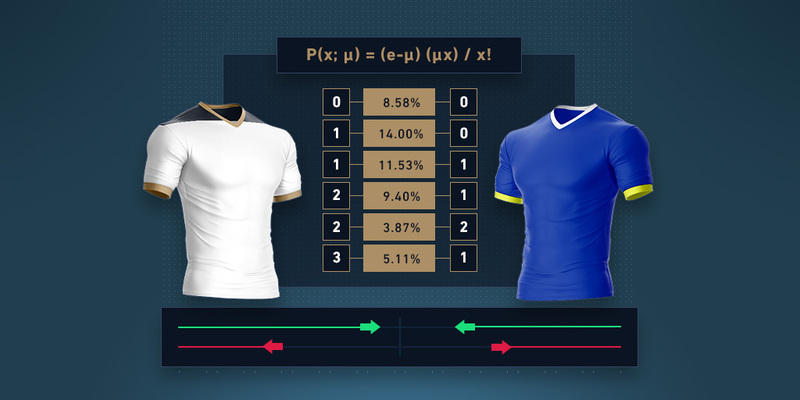
Kelly Criterion betting isn’t perfect. Here’s where it genuinely underperforms.
Edge estimation is the Achilles heel. Kelly only works if your estimated win probability is accurate. Most bettors overestimate their edge by 2–5 percentage points. Feed an inflated edge into the Kelly formula and it recommends overbetting. Consistent overbetting erodes bankrolls faster than flat staking would.
Variance is brutal at full Kelly. Even a bettor with a real edge will experience 20–30% bankroll drawdowns running full Kelly. Flat staking at 1–2% units produces far smoother equity curves. For bettors who tilt under pressure, the smoother ride of flat staking is practically worth more than Kelly’s theoretical edge.
Kelly doesn’t handle parlays or correlated bets neatly. The formula assumes independent single-game bets at defined odds. Adapt it to parlays and the math gets complicated fast. Most bettors abandon Kelly entirely for multi-leg betting.
Psychological friction. Kelly Criterion requires tracking win rates by bet type, sport, and market. Most recreational bettors don’t have that data. Without it, Kelly becomes guesswork dressed up in a formula. Flat staking with 1–2% units, done consistently, outperforms misapplied Kelly every time.
Kelly Criterion vs. The Rest: Which System Fits Your Betting Style?
Here’s the honest summary after comparing all the systems side by side.
If you’re new to sports betting stragegy: Use flat staking at 1–2% per unit. Build your record. Track win rates across markets. Don’t touch Kelly until you have at least 500 bets of documented history.
If you’re an intermediate bettor with tracked data: Try Half Kelly on your highest-confidence bet types. Keep flat staking for markets where your edge is unclear. Run them side by side. Compare results after 200+ bets.
If you’re a sharp bettor with proven edges: Full or 3/4 Kelly makes sense — but only on bet types where your historical win rate is reliable and sample size is large enough to trust.
If you value bankroll stability above growth speed: Fixed fractional at 2–3% beats all versions of Kelly Criterion betting in terms of emotional sustainability.
The system is the most mathematically sound staking strategy ever built for sports wagering. That’s not an opinion — it’s provable. But “mathematically sound” and “practically optimal for you” are different things.
Conclusion
Kelly Criterion betting wins the theoretical debate against flat staking, fixed fractional, and most other systems — when edge estimates are accurate. That condition is everything. The system rewards honest self-assessment and punishes overconfidence. Compared to simpler approaches, Kelly grows bankrolls faster over large samples but introduces variance that many bettors can’t handle emotionally. The right choice depends on your data quality, your discipline, and your risk tolerance. For most sports bettors, the path forward is clear: track everything first, then let the Kelly math guide your stakes when the numbers are real.