
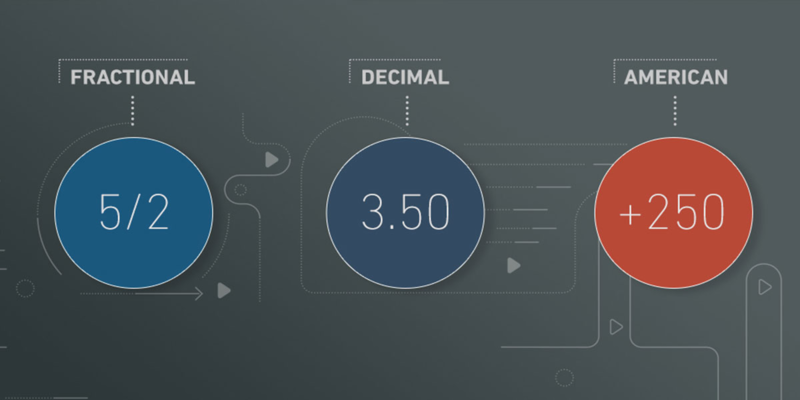
Fractional Odds: The Oldest Format on the Board
Walk into any traditional British bookmaker or pull up a horse racing board in Ireland and you’ll see them immediately. Numbers like 5/1, 7/2, 11/4. No plus signs. No minus signs. Just a fraction.
Fractional odds are the oldest format in sports betting. They predate American odds by decades and were the global standard long before decimal odds took over online markets. Today they’re less dominant — most international sportsbooks default to decimal — but they remain deeply embedded in horse racing, UK football markets, and any platform with British roots.
This betting 101 article compares fractional odds directly against decimal and American formats — how they read, how they calculate, and where each one actually fits into a serious betting workflow.
How Fractional Odds Work Compared to Decimal Odds
Fractional odds express profit relative to stake. The numerator is what you win. The denominator is what you risk. That’s the entire formula.
5/1 → stake $1, profit $5. Total return: $6. 7/2 → stake $2, profit $7. Total return: $9. Or proportionally: stake $100, profit $350. Total return $450. 1/2 → stake $2, profit $1. Total return: $3. This is a heavy favorite — you’re risking more than you stand to gain.
The implied probability formula for fractional odds: denominator ÷ (numerator + denominator) × 100
For 5/1: 1 ÷ (5 + 1) × 100 = 16.7% For 7/2: 2 ÷ (7 + 2) × 100 = 22.2% For 1/2: 2 ÷ (1 + 2) × 100 = 66.7%
Now compare the same bets in decimal format:
| Fractional | Decimal | Implied Probability |
| 5/1 | 6.00 | 16.7% |
| 7/2 | 4.50 | 22.2% |
| 1/2 | 1.50 | 66.7% |
| Evens (1/1) | 2.00 | 50.0% |
The key difference: decimal odds include your original stake in the return figure. Fractional odds show only profit.
This is where decimal wins on clarity. Odds of 6.00 immediately tells you your $100 becomes $600 total. Fractional 5/1 requires one extra mental step — add the stake back. For experienced bettors that’s automatic. For anyone newer to the format, decimal is simply faster to process.
Converting fractional to decimal: divide numerator by denominator, then add 1. 5/1 → (5 ÷ 1) + 1 = 6.00 7/2 → (7 ÷ 2) + 1 = 4.50
Fractional Odds vs. American Odds: Two Different Approaches to the Same Information
American odds and fractional odds both express the same thing — payout relative to risk — but they frame it in opposite directions.
American odds use a $100 baseline. Positive numbers show profit on a $100 bet. Negative numbers show the required stake to profit $100. Fractional odds have no fixed baseline. You calculate proportionally.
Side-by-side comparison:
| Fractional | American | What It Means |
| 5/1 | +500 | Underdog — profit 5x stake |
| 2/1 | +200 | Moderate underdog |
| Evens (1/1) | +100 | 50/50 proposition |
| 1/2 | -200 | Moderate favorite |
| 1/5 | -500 | Heavy favorite |
The pattern is clear. Fractional odds with a numerator larger than the denominator correspond to positive American odds (underdogs). Fractional odds with a numerator smaller than the denominator correspond to negative American odds (favorites).
Converting fractional to American:
- If numerator > denominator: (numerator ÷ denominator) × 100 Example: 5/1 → (5 ÷ 1) × 100 = +500
- If numerator < denominator: −(denominator ÷ numerator) × 100 Example: 1/4 → −(4 ÷ 1) × 100 = −400
For U.S. bettors, American odds are faster to interpret at a glance. The minus/plus sign immediately signals the favorite versus the underdog.
Where Fractional Odds Still Dominate and Why It Matters
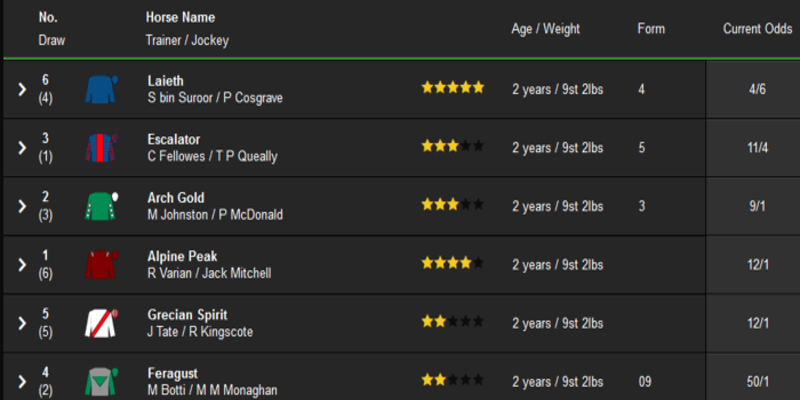
Despite losing ground to decimal odds in most global markets, fractional odds remain the default in specific contexts. Knowing where you’ll encounter them shapes how much attention they deserve.
Horse racing is the clearest case. British, Irish, and Australian horse racing boards display fractional odds almost universally. The tradition runs deep and the format remains standard. If you bet any racing markets on UK or Irish platforms, fractional odds fluency isn’t optional.
UK and Irish football betting also skews fractional on legacy platforms. William Hill, Betfred, Ladbrokes — older British bookmakers still display fractional by default, though most now offer a decimal toggle.
Betting exchanges like Betfair default to decimal but show fractional equivalents. Understanding both helps you cross-reference quickly without a calculator.
Ante-post markets and futures — long-term bets placed well in advance — are still commonly quoted in fractional format in British media. A horse quoted at 10/1 for the Grand National, a football team at 7/2 to win the Premier League.
If your betting is limited to U.S. sportsbooks covering NFL, NBA, MLB, and NHL, you may rarely see fractional odds in practice. But the moment you explore international markets, horse racing, or British-facing platforms, the format becomes immediately relevant.
Choosing the Right Format: When to Stick With Fractional and When to Switch
Here’s the practical breakdown for bettors deciding which odds format to use as their primary lens.
Use fractional odds when:
- Betting horse racing on UK or Irish platforms
- Working with British bookmakers where fractional is the default display
- Comparing long-shot prices in futures or ante-post markets, where round fractions like 10/1 or 33/1 are easy to read quickly
- You’ve grown up with the format and the mental math is already automatic
Use decimal odds when:
- Betting across multiple international sportsbooks
- Shopping lines across European platforms and exchanges
- You want the fastest route to implied probability — one division, no extra steps
- You’re newer to betting and want the clearest payout picture
Use American odds when:
- Betting exclusively on U.S. sportsbooks covering major American sports
- Reading line movement and spread pricing where the -110 standard is constant reference
- Communicating picks with other U.S. bettors where the format is universal
The Bottom Line: Fractional Odds Are Old, But Not Obsolete
Fractional odds aren’t going away. Horse racing, British football, legacy platforms, futures markets — they’re embedded in too many contexts to ignore.
More importantly, understanding fractional odds deepens your overall odds literacy. The logic — profit relative to stake, expressed as a ratio — is one of the cleanest ways to think about betting value. Once you see that 5/1 means the market thinks this happens once every six tries, you’re reading probability, not just price.