

Why Betting Bankroll Management Decides Your Fate Before the Game Even Starts
Most bettors lose not because they pick bad teams. They lose because they run out of money before their edge has time to show up.
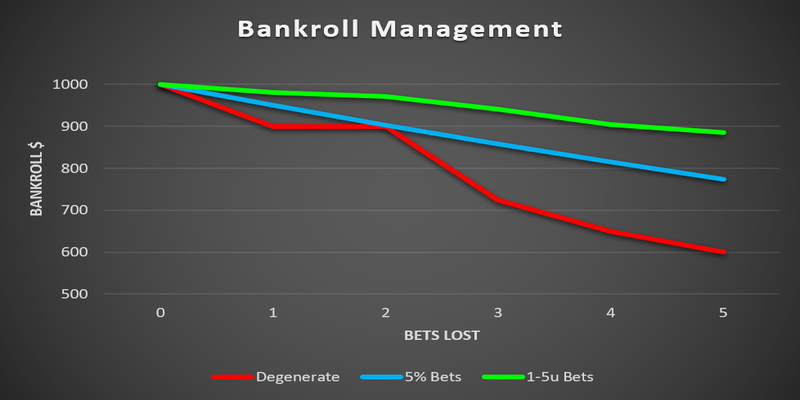
Sports betting is a long-term game. Even a bettor hitting 54% win rate — a genuinely profitable clip — will go through stretches of 6, 7, even 10 consecutive losses. That’s not bad luck. That’s variance. It’s mathematically expected.
Betting bankroll management is what keeps you alive through those stretches. It’s the system that determines how much you bet, when you bet more, and when you pull back. Without it, one bad week can end a season. With it, a losing streak is just a data point.
The seven tips below aren’t theory. They’re the practical habits that separate bettors who last from bettors who quit.
Set the Foundation of Your Betting Bankroll Management System
Tip 1: Define your bankroll before you bet a single dollar
Your bankroll is a dedicated pool of money set aside exclusively for betting. It is not your checking account. It is not an emergency fund. It is a separate, fixed amount that you are prepared to lose entirely if necessary.
Start with an amount that’s realistic and genuinely disposable. $500 is enough to run a serious flat-betting system. $2,000 gives you more variance protection. The exact number matters less than the fact that it’s ring-fenced and treated as a business budget — not personal funds.
Tip 2: Use flat betting as your default unit sizing strategy
Flat betting means wagering the same dollar amount — called one unit — on every bet. Standard practice is 1–3% of your total bankroll per game.
On a $1,000 bankroll at 1% per bet, one unit = $10. You bet $10 on every game, regardless of how confident you feel. The bankroll can survive 50+ consecutive losses at 2% per unit before hitting zero. That’s enough cushion to ride out even brutal variance runs.
Flat betting sounds boring. That’s exactly why it works. It removes the temptation to overbet “sure things” — which usually aren’t — and keeps your downside controlled even when your read on the game is completely wrong.
Size Bets Smartly and Avoid the Traps That Drain Bankrolls Fast
Tip 3: Never chase losses with bigger bets
This is the most violated rule in betting bankroll management. You lose three straight. The instinct says: bet bigger to get even faster. That logic destroys bankrolls.
Chasing losses is an emotional response to variance. It treats a random losing streak as a debt to be paid. It isn’t. Three losses in a row tell you nothing reliable about what happens next. Increasing unit size mid-run compounds risk at exactly the wrong moment.
The rule is simple: your unit size doesn’t change based on recent results. Win three in a row — same unit. Lose five in a row — same unit. Consistency is the entire point.
Tip 4: Don’t let a big win inflate your bet sizing
This one is quieter but just as damaging. You have a great week. Your bankroll is up 20%. Now $50 bets feel small and you start betting $100. The bankroll math that kept you safe at 2% per unit no longer applies. You’re now betting 4%.
Winning streaks end. When the variance corrects, inflated bet sizing turns a normal downswing into a wipeout. Stick to your unit percentage regardless of recent performance. If your bankroll grows, units grow proportionally — but the percentage stays constant.
Refine Your Betting Bankroll Management Over Time
Tip 5: Track every single bet
You cannot manage what you don’t measure. Every bet should be logged: date, sport, bet type, odds, unit size, result, and profit/loss.
Tracking does two things. First, it shows you your actual ROI over time — not the figure you feel like you’re hitting, the real one. Second, it reveals patterns. Maybe you’re profitable in NFL but consistently negative in NBA. Maybe you’re strong on spread bets and leaking money on totals. You’ll never know without the data.
Keep the log in a spreadsheet or use one of the tracking tools available at Moneyline.fyi. Revisit it monthly. Let the numbers guide adjustments, not your memory of the last few games.
Tip 6: Adjust unit size only when bankroll crosses clear thresholds
Your unit size should drift upward when you’re winning and protect against ruin when you’re losing. But don’t adjust constantly — that defeats the stability flat betting provides.
A reasonable rule: recalculate your unit size every 50–100 bets, or when your betting bankroll management has moved by 25% in either direction. If you started at $1,000 and you’re now at $1,300 — good run — one unit at 2% is now $26, not $20. If you’ve dropped to $750, one unit is $15.
Treat Betting Bankroll Management as a Long-Term Discipline, Not a Short-Term Fix
Tip 7: Set a stop-loss and a stop-win for each session
Professional traders use daily loss limits. Serious sports bettors should too. Decide before you open the betting app: if I lose X units today, I stop. If I win Y units today, I also stop.
The stop-loss prevents tilt from compounding. If you’re down 4 units before noon and keep betting angry or desperate, you can easily lose 8 more before the day ends. The stop-win prevents overconfidence from undoing a great day.
A common framework: stop betting for the day if you lose 3 units. Stop adding new bets once you’re up 5 units. Lock in the result and come back tomorrow with a clear head.
Betting bankroll management isn’t just a staking formula. It’s a behavioral system. The math matters, but the discipline to follow it — especially when variance is running against you — is what actually determines your long-term outcome.
The Bottom Line on Betting Bankroll Management
These 7 tips share a common thread: control. Control over how much you risk. Control over how you respond to losing streaks. Control over the decisions that happen before the games even start.
The bettors still in action 6 months from now are the ones who never let a single session define their season.